How Observability Saved a Production System
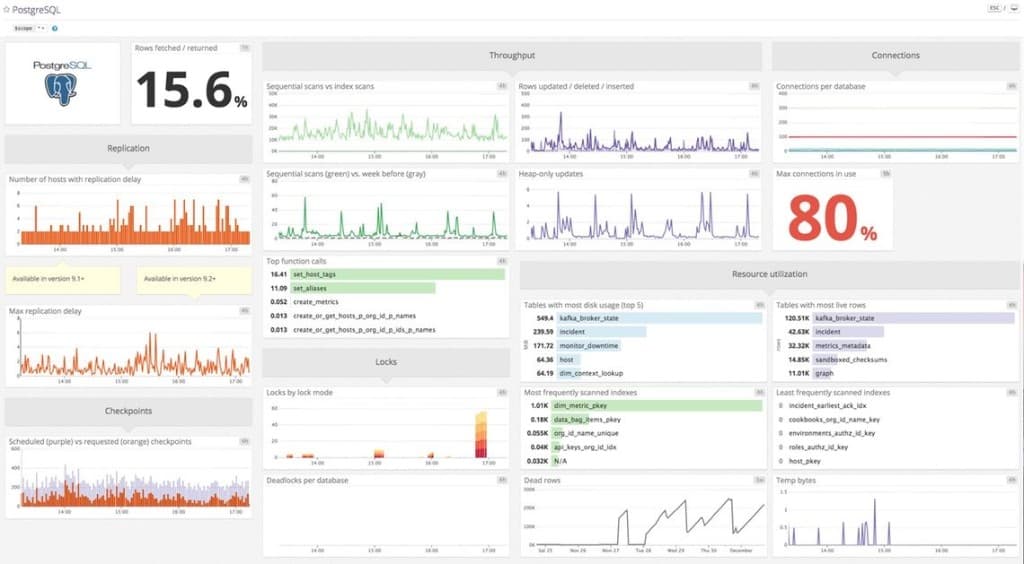
In production environments, the most critical failures are often the ones that leave no trace.
Some time ago, I faced an issue where servers would shut down unexpectedly, without errors, without logs, and without any clear signal of what was happening. Traditional debugging approaches led nowhere.
My initial assumption was infrastructure related. I suspected high request volume, so I scaled the system horizontally by adding more nodes. However, the problem persisted. Even with increased capacity, nodes continued to fail.
At that point, it became clear that the issue wasn't about scale, it was about visibility.
The power of distributed tracing
I implemented distributed tracing using Datadog and allowed the system to run until the failure occurred again. Once it did, I analyzed the traces and built a dashboard to better understand the system's behavior over time.
That decision changed everything.
The data revealed an abnormal spike: a specific function was being executed repeatedly, far beyond expected patterns. Upon deeper inspection, I identified the root cause: a recursive function that, under certain conditions, was entering an infinite loop.
This loop wasn't generating explicit errors, but it was silently exhausting system resources until the server crashed.
The fix and the lesson
After correcting the recursion logic, the issue was fully resolved. The system stabilized, and no further unexpected shutdowns occurred.
This experience reinforced a key principle:
You cannot solve what you cannot see.
Observability is not just a tool, it is a fundamental capability for building reliable systems. Without it, teams rely on assumptions. With it, they operate on evidence.
Why observability matters
In modern distributed systems, failures are rarely obvious. They don't always trigger alarms or show up in basic logs. Sometimes, the system appears to be working until it suddenly isn't.
That's where observability becomes critical. It allows you to:
- Trace requests across multiple services
- Identify performance bottlenecks before they become critical
- Understand system behavior under load
- Debug issues that traditional logging cannot capture
The ability to see what your system is doing in real time is not optional. It's essential.